Stays beside the work. Counts only while you are at the screen.
Why it exists
Your eyes work hard for you. Screens make them work worse.
Focused computer use often cuts blink rate in half. Sparse, uneven blinking is a known driver of digital eye strain, dryness, grit, fatigue, blurred vision, and it is easy not to notice until the eyes already hurt. EyesRhythm is a blink rate detector that sits beside that work.
What rhythm means
Rate and regularity, together.
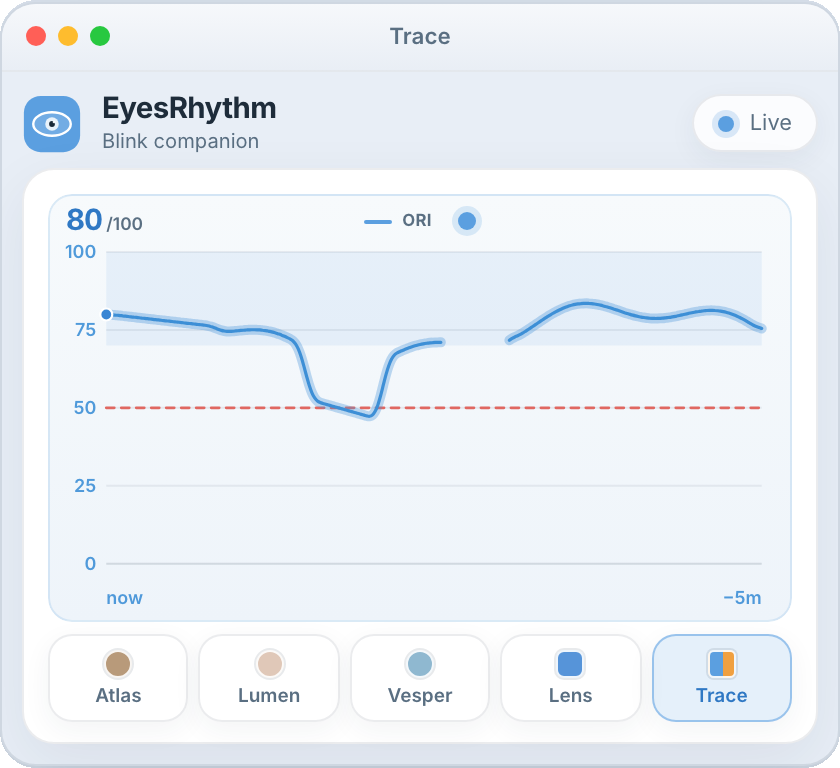
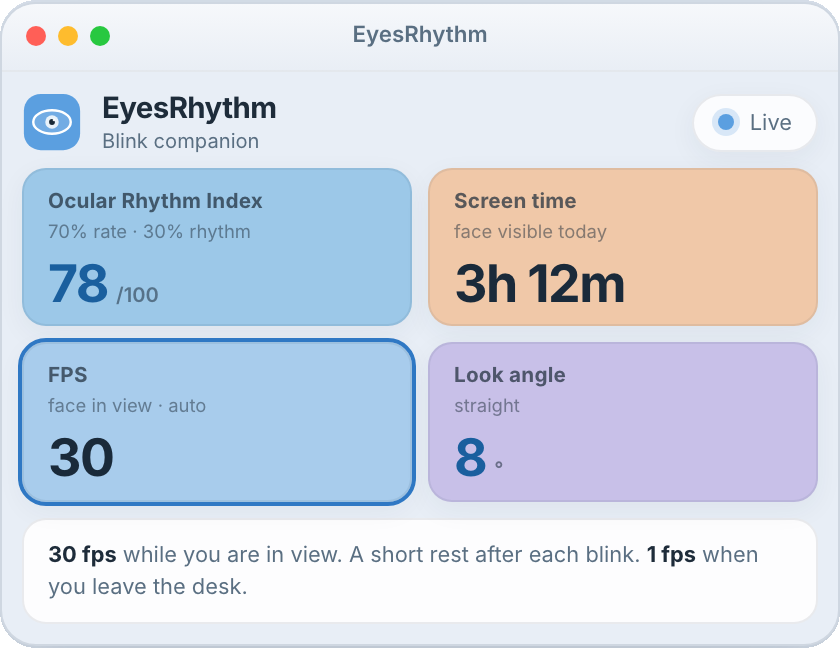
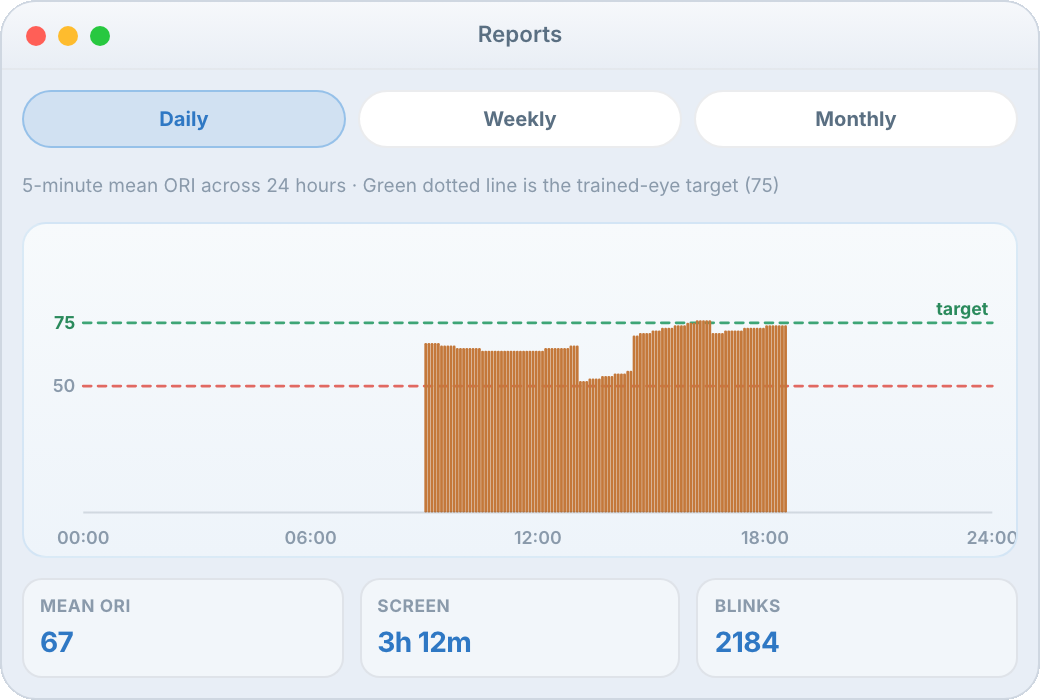
Rate is how often. Regularity is how steady. Enough blinks can still arrive in bursts and droughts; a slow but even pattern still leaves the surface dry. EyesRhythm folds both into the Ocular Rhythm Index (0 to 100). Maximize your healthy desk ORI, use practice daily, it helps to build muscle memory.
The companion
It watches, scores, and, if you ask, gently nudges.
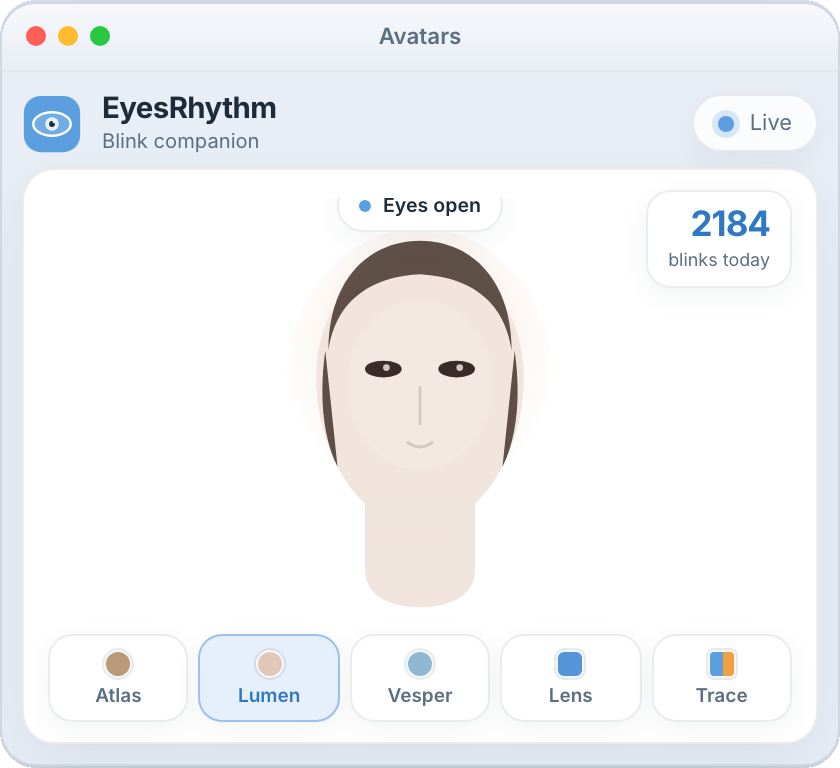
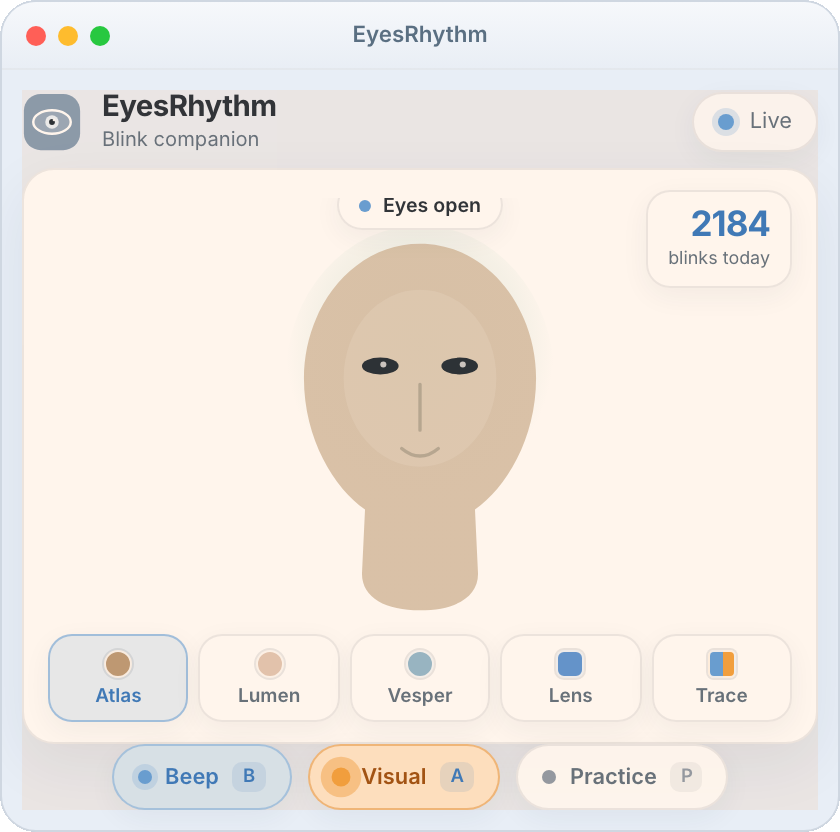
ORI on a compact window. Alert is always on: Visual by default, a quiet orange pulse, or Sound if you click A. Optional beep on each blink. Practice is a two-minute coach so the habit is easier to feel. A wellness companion, not a medical device. Lasting discomfort belongs with an eye-care professional.