
The work is going well, and then it isn’t, at least not for the eyes. The letters on the screen lose their edge. You rub once, keep typing, and by late afternoon the lids feel like paper.
Brightness gets the blame. So does dry office air, or the familiar warning about “too much screen.” But for many of us, screens are not optional. They are where the work happens. The less obvious problem is what happens while we are looking at them. We blink less, and the blinks we do make are often incomplete. They come in bursts, separated by long pauses. During those pauses, the tear film covering the eye begins to thin.
Nobody decides to blink less. Attention does it for us, and researchers have been measuring the effect for more than thirty years.
The response is not to stop using screens. It is to learn to notice what happens to your blinking and practice doing it more completely. With guidance, that can become a habit.
What a blink is actually doing
A blink is a wipe. The lids drag a thin film of tears across the eye, mix in oil from glands along the lid, and clear dust. Miss a few of those wipes and the film thins, then breaks. For a moment the surface of the eye is just sitting in the air.
“The blinking mechanism plays a critical role in maintaining homeostasis of the ocular surface, tear film, and lacrimal functional unit.”
Wang, Power, Xue and Craig, 20251
Blinking is how the front of the eye stays wet, fed, and protected. A late wipe, or a half wipe, leaves that system with less to work with. You look through the film. When it breaks, the letters on the screen are often the first thing that go soft.
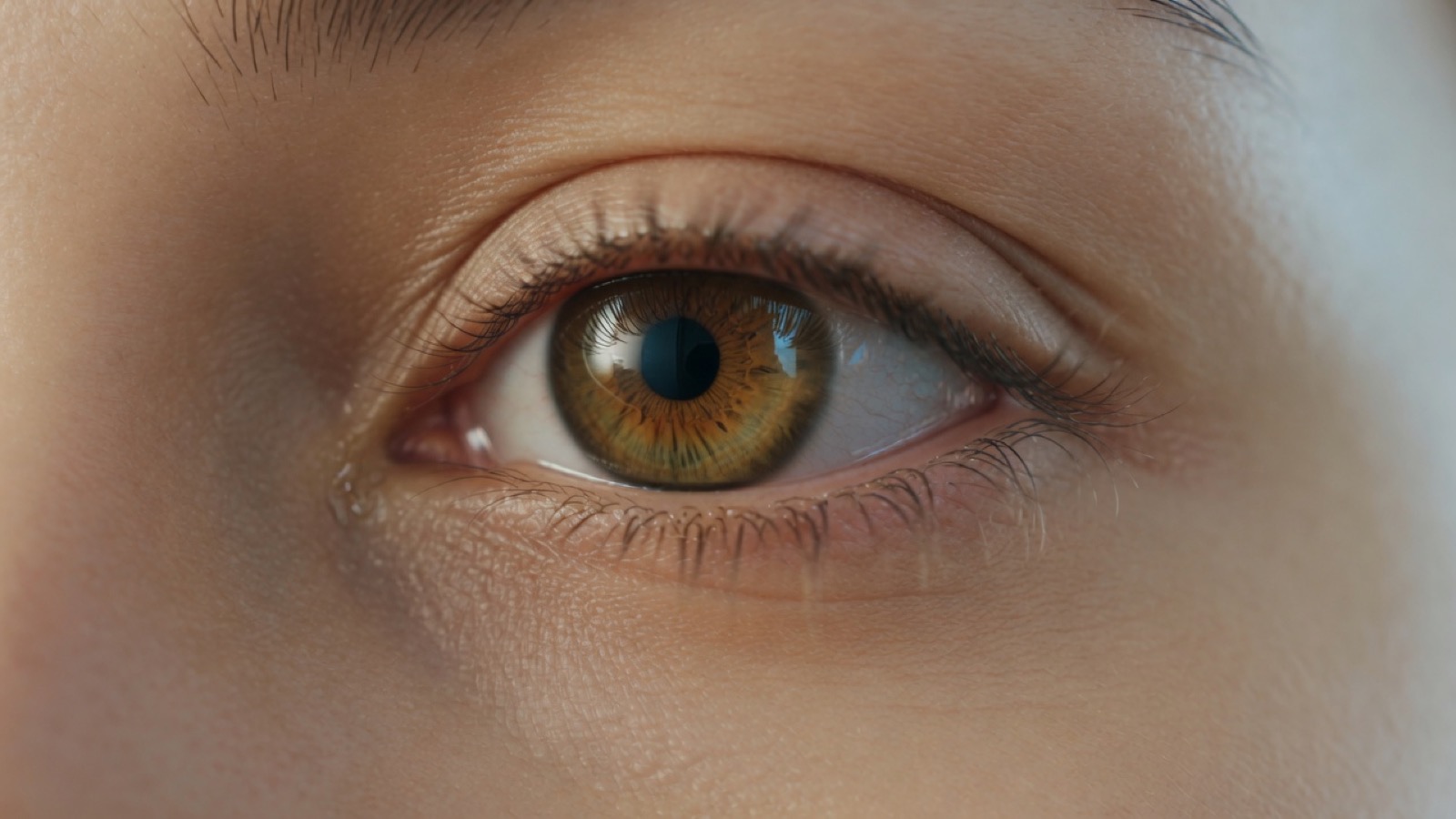
The rate is not a constant
People talk about “a normal blink rate” as if it were a resting heart rate. It isn’t. How often you blink depends on what the brain is doing with the eyes. Talk, sit quietly, read, stare at a monitor: each of those has its own pace.
“Spontaneous eyeblink rate (SEBR) has been shown to be highly sensitive to cognitive and ambient conditions… cognitively demanding tasks such as reading and using visual display terminals have been documented to lower SEBR values.”
Cardona, Argilés and Pérez-Cabré, 20232
Tsubota and Nakamori made this concrete in 104 office workers. They counted blinks while people were relaxed, while they read a book, and while they looked at a screen. Mean rates: 22 blinks a minute at rest, 10 with the book, 7 at the display. 3 The book already halved the rate. The screen took more.
22
blinks / min
Relaxed
10
blinks / min
Reading a book
7
blinks / min
Looking at a screen
Two years earlier, in a smaller lab study, Patel and colleagues had already seen how far the drop can go:
“In normal healthy subjects, the results show an average 5-fold drop in blink rate during VDU use.”
Patel, Henderson, Bradley, Galloway and Hunter, 19914
That is not a small dip. Eighteen blinks a minute in easy conversation can fall toward three or four in front of a display. The film then has seconds, not fractions of a second, to dry between wipes.
Talking sits at the other extreme. Bentivoglio’s group recorded about 26 blinks a minute in conversation, 17 in quiet looking, and 4.5 while reading.5 Speech is a high-blink job. A page, or a screen, that has all of your attention is a low-blink job. Same pair of eyes. Different demand.

Half a blink is not a blink
Counting how often the lids move still misses something. If they never quite meet, the wipe does not finish. The upper lid stops short, and a strip of the eye never gets the film renewed.
“Previous studies have also highlighted that the diminished blink rate and increased tendency for incomplete blinking during tasks with high cognitive demand, such as digital screen use, can exacerbate dry eye symptoms and tear film instability.”
Wang, Power, Xue and Craig, 20251
Wang’s group tested 453 adults and found that incomplete blinking tracked dry eye, as defined by a standard clinical checklist, more closely than blink rate did. For every extra 10% of blinks that failed to finish, the odds of that diagnosis rose by about 12%. Incomplete blinking also lined up with a thinner oil layer and poorer quality of the lid glands. 1
That is a mechanism, not a verdict on anyone reading this. Oil in the lids is squeezed out as the lids meet. A half blink squeezes less, spreads less, and leaves a dry patch sitting there.
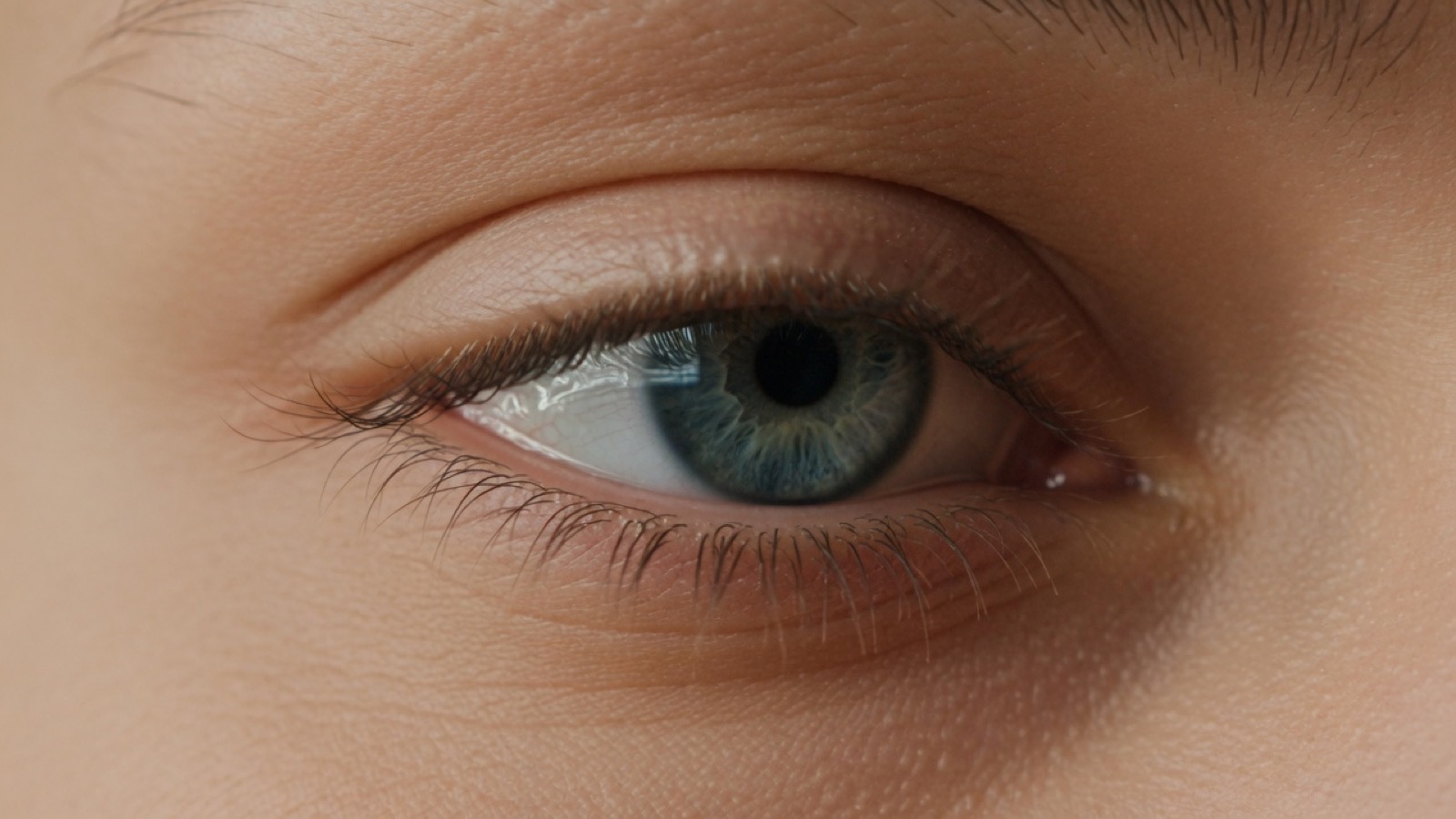
The average can lie
Six blinks a minute sounds like a single number. It isn’t. Six blinks spaced through the minute, and six blinks piled into two clumps with a long wait in the middle, produce the same average and two very different hours for the eye.
Cardona, Argilés and Pérez-Cabré call the evenness of those gaps blink regularity. They measure it as the coefficient of variation of the interblink interval: how much the waits between blinks wander, relative to their mean. 2
To show why that matters, they drew four one-minute patterns that all had the same average gap of 12 seconds, and the same six blinks. Even, complete blinks left the surface exposed for about 17% of the minute. The same six blinks, arriving in clumps with a long empty stretch, pushed exposure above 50%. Incomplete blinks on top of the clumps pushed it higher still. 2 The count had not changed. The uncovered time had.
Same six blinks. Different minute.
Even
A blink about every 12 seconds
Lumpy
A cluster, a long wait, another cluster
Johnston and colleagues looked at those same gaps, the interblink interval, in people with and without dry eye while they watched a documentary. Mean interval: 5.97 seconds in the normal group, 2.56 seconds in the dry-eye group. They also found “a greater variability of interblink intervals in normal subjects.” 6
Comfortable blinking is not a metronome, and it is not a panic. It can wait, then catch up. Irritated eyes often do the opposite: more blinks, tighter spacing, as if the surface is asking for another wipe. A long screen day can shove a comfortable eye the other way, toward fewer blinks and longer waits.
“The tendency towards decreased blink rate during visual function tasks, such as computer use, reading, video gaming, and watching TV can exacerbate the signs and symptoms of dry eye.”
Johnston, Rodriguez, Lane, Ousler and Abelson, 20136
Why the brain does this
A blink is a blackout, even if it lasts only a fraction of a second. When the work on the screen is dense, the brain either parks those blackouts between important moments or holds them back altogether. You keep seeing. The film waits.
Nakano and colleagues found that people watching the same video tended to blink in sync, at the moments when they were least likely to miss what mattered.7 Cardona’s group described “an internal mechanism to regulate the most appropriate time for a blink in order to minimize the chance of losing critical information.” 2
That helps the work. It does not help the film. You did not forget to blink. You were busy, and the lids waited.
What this means at a desk
Three things, working together, explain a lot of that late-day grit.
- The rate falls. Hard reading cuts blinks. Screens often cut them further.
- The blinks go shallow. Incomplete ones leave a strip unwiped and spread less of the oil layer.
- The timing gets lumpy. The same number of blinks, packed into clusters, can leave a long dry wait in the middle of the minute.
“A complete characterization of blink parameters is relevant to better understand ocular dryness related to surface exposure and to advice patients towards a reeducation of their blinking habits.”
Cardona, Argilés and Pérez-Cabré, 20232
Count is not enough. How fully the lids meet, and how even the gaps are, belong in the same picture. Cardona’s group also noted “the large percentage of users reporting ocular dryness during and after prolonged computer work.” 2 Anyone who has finished a long day at a laptop has already felt that sentence.
A screen is not poison, and none of this is a diagnosis. It is a description of a particular hour: still face, high attention, lids on hold. A look away, a full close, a slightly more even rhythm are small physical things, the way a stretch is a small thing for a stiff neck.
EyesRhythm is a blink rate detector built around that picture. It watches how often you blink and how even the gaps are, on this computer. Video stays here. It is a desk companion, not a clinic. The score in the window is how those two things become one glance. If the eyes stay sore, or vision changes, that is a conversation for an eye-care professional.
The camera has to see the eyes first. Sit as you usually work; the setup guide is short.
Sources
- Wang MTM, Power B, Xue AL, Craig JP. Blink completeness and rate in dry eye disease: an investigator-masked, prospective registry-based, cross-sectional, prognostic study. Contact Lens and Anterior Eye. 2025;48:102369. doi:10.1016/j.clae.2025.102369
- Cardona G, Argilés M, Pérez-Cabré E. Loss of blink regularity and its impact on ocular surface exposure. Diagnostics. 2023;13:2362. doi:10.3390/diagnostics13142362
- Tsubota K, Nakamori K. Dry eyes and video display terminals. New England Journal of Medicine. 1993;328:584. doi:10.1056/NEJM199302253280817
- Patel S, Henderson R, Bradley L, Galloway B, Hunter L. Effect of visual display unit use on blink rate and tear stability. Optometry and Vision Science. 1991;68(11):888–892. doi:10.1097/00006324-199111000-00010
- Bentivoglio AR, Bressman SB, Cassetta E, Carretta D, Tonali P, Albanese A. Analysis of blink rate patterns in normal subjects. Movement Disorders. 1997;12(6):1028–1034. doi:10.1002/mds.870120629
- Johnston PR, Rodriguez J, Lane KJ, Ousler G, Abelson MB. The interblink interval in normal and dry eye subjects. Clinical Ophthalmology. 2013;7:253–259. doi:10.2147/OPTH.S39104
- Nakano T, Yamamoto Y, Kitajo K, Takahashi T, Kitazawa S. Synchronization of spontaneous eyeblinks while viewing video stories. Proceedings of the Royal Society B. 2009;276:3635–3644. doi:10.1098/rspb.2009.0828
EyesRhythm is a wellness companion, not a medical device. It is not intended to diagnose, treat, or prevent disease. Persistent discomfort or a change in vision belongs with a licensed eye-care professional.
All journal · Blink rate detector · Why the blink count is not enough · Camera setup